Showing posts with label Classics. Show all posts

Thursday, January 19, 2017

Lauren's Most Recent Book Haul

I honestly can't remember the last time I threw together a book haul post, so that must mean it's been too long! Here's a few books I bought over the last couple of weeks. Some were on sale and a couple just caught my eye!


What's in your latest book haul?

Wednesday, July 2, 2014

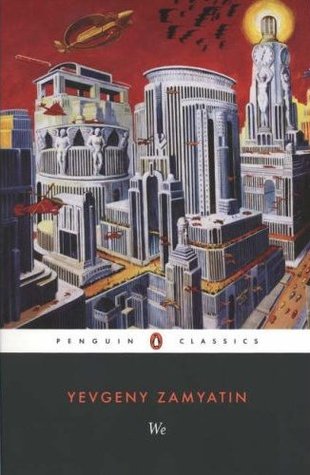
Paula Reviews We by Yevgeny Zamyatin


We by Yevgeny Zamyatin
Published in 1921
Rating: 4 stars
How I got it: Found a copy at a local book store!


Hey all!

So this summer I made a mini goal of tackling books that have been on my shelf/list for more than a year. Whether they are super long (The Historian) or not quite genre's I'm interested in anymore (White Oleander) or in this case- hard to find and kind of intimidating.

I have been intimidated by We for awhile because it is the foundation block of my favorite genre: dystopian literature. And I'm not talking about contemporary dystopian stories like The Hunger Games (which don't get me wrong - I love a lot) but he was threatened by communist Russia for writing this kind of literature. People claimed that this book predicted Stalinism. It has been claimed that this book inspired 1984 and Brave New World. I've been putting this book off for awhile. What if I didn't understand it? What if I didn't like it?

The premise:
After a Two Hundred Year War society, One State, has been rebuilt under the guidance of the Great Benefactor. Humans are no longer people they are numbers. The main character, D-503, is the main builder of the spaceship Integral to bring the order of One State to other planets. Every minute of a person's life is planned out by the Table of Hours. 

D-503 is happy and blissful with his life until he meets I-330. She doesn't play the rules. At home she doesn't wear her uniform and drinks alcohol (which has been banned). He would hate her and report her if he didn't find her so interesting. As D-503 gets to know I-330 more he begins to develop.... an imagination....

Thoughts: 
I really enjoyed this book. It wasn't perfect- there were a lot of things that I wish had more details or development. Sometimes the writing was choppy and hard to follow (although- that could be the translation and not the original). There were a few times where I had to pause and go "wait what just happened?"

But besides those things- This book was a great read. It had some terrifying ideas, like imagination being treated as a sickness or any crime (even not reporting for work without a sick note) being punished with public execution... 
I found it really exciting to know the history of the book and see how this truly was a scary predictor of Stalinist Russia (the history geek in me was quite happy). I also could see how some of my favorite books were inspired by this book. 

If you are looking for a book that's a bit of a challenge but has some interesting history behind it- I would definitely recommend this one! 

Monday, November 4, 2013

Five Years--What a Difference

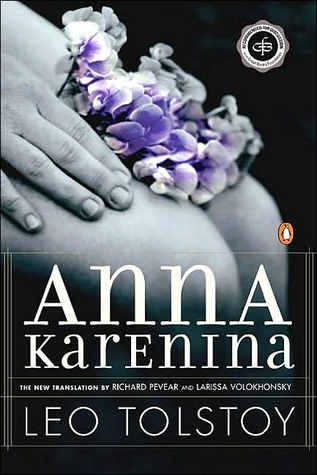
I know that at some point I should cease to be amazed by the changes in my reading life--insights, perceptions, reactions--but I can't help it.  The latest incident comes from re-reading a favorite that I read five years ago--Anna Karenina by Leo Tolstoy.


I started and stopped this book a number of times before finally pushing through to the end, which I vowed to do by my 21st birthday.  I succeeded in finishing a couple of days ahead of schedule.  I loved the book.  I became so totally engrossed by the ending that I felt what Anna K felt--I understood her desperation and her fear and all the emotions.  There were, to be sure, long speeches on government and politics that I glossed over.  But I finished the book.

Now, just before I turn 26 next week, I am re-reading Anna K.  I didn't do it on purpose.  I just felt that yearning to read something fabulous and Russian that would make me feel...everything.

So I picked up a copy, in a different translation (for Russian authors, I always favor the Pevear and Volohonsky translation) because that was all the local pseudo-bookstore had available and I just had to get my hot little hands on a copy immediately.  I've been interacting with the text, underlining, bracketing, writing questions/thoughts/reactions in the margins and marking things to come back to, which was something I did not do on the first go.  I think this was because I was too swept up in what Tolstoy was doing and also reading so furiously that I just could not stop.

The main thing is that I am also looking at things from different angles this time.  I got this idea from Amanda at Dead White Guys, who has written a few times about Anna K, but this mention of the book in a Top Ten Tuesday and this review of her re-read are my favorites.  The first link gave me the idea of re-reading the book and focusing on Levin, who is supposed to be a semi-autobiographical representation of Tolstoy.  The second reminded me of the grandeur of the book.

I have to say, I am thoroughly enjoying this re-reading.  I am getting sucked into the book in ways that I didn't the first time (does this happen to anyone else?  Maybe I should read everything twice!).  I find myself thinking of the characters and the plot and the words even after I have set aside my copy for the time being.  I would love to take off work and real life for the next week so I can just finish.  But maybe have to read in fits and starts is helping it soak in more than if I just indulged in my impulse to immerse myself.  Maybe coming up for breaks is helping me digest it better.

And in thinking about the overall book, I can see why Levin is in many more ways the hero and the point of the story.  Anna might be a cautionary tale; but Levin is the ultimate message.  At 20, I just sort of figured that the book was named after the character for a reason, so that was where I focused.  Not necessarily, my friends.

I am super excited to be reading this.  Granted, I always go into any reading experience whole hog and then it peters out (usually).  But I don't see that happening this time.  I am too intrigued by what I am noticing as I read and the characters that I notice and am thoroughly enjoying.  So fun!

Has anyone else ever tried re-reading a favorite from a different perspective?  How did that work for you?

Sunday, October 6, 2013

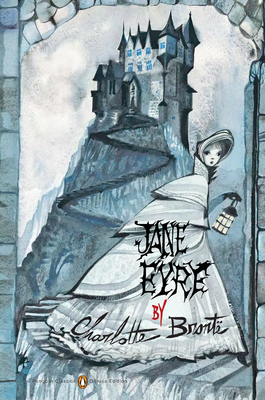
Lori Reviews Jane Eyre

Lately, I've been trying to go through my to be read list and knock off some books that have been lingering for a while and judging me for not reading them.  I finished Pride and Prejudice in August and in September I finally finished Jane Eyre.  What follows is my spoiler-ful review of the novel, so proceed with caution if you have not yet read it.


I loved Jane Eyre.  Loved it.  Up until about 2/3 to 3/4 of the way through.

The novel had a wonderful beginning.  Jane was mistreated by her aunt and cousins, but she survived and stood up for herself when and where she could.  Then she went off to the school where, after some improvements were made, she thrived.  She developed into a strong young woman.  She spread her wings and became a governess to a really cute little girl and dealt with her new master, Rochester.  At times Rochester was a bit of a jerk by kind of jerking Jane around.  But she stood strong and kept developing in her new life.  Jane was so much more wonderfully opinionated than I expected for a character created in the early 19th century, which was fantastic!

So Rochester and Jane were engaged and were going to get married in a big huge rush and Jane wouldn't allow herself to be excited about it, which was kind of a sign.  Then they're at the church and someone comes up and says that they can't get married because Rochester is already married...to the "thing" in the attic, which I totally knew was going to happen.  Jane basically shuts him down when he says that in his mind he was no longer married, etc.  And that was great.  I was so proud of her for doing that, for standing her ground and doing what she believed was right and for wanting Rochester on even terms, not just on his terms.  Jane's strength and willfulness were great.

Then she decides to leave the house.  Understandable.  She decides to go while everyone else is asleep.  Still understandable.  She doesn't bring a whole lot of stuff because that's a lot to carry and she doesn't feel like much of this is hers.  Also understandable.

But then she gets on a carriage that will use all of her money.

Then she leaves all of her things on the carriage.  And literally has nothing.  She proceeds to wander around, sleeping outside, as she figures out what to do next.  Logically, I know that she didn't really have any other resources.  But to myself, I was saying:


Honestly, this bit reminded me of the last ten chapters of Huck Finn.  Uh...spoilers...Twain got Huck and Jim off of the raft, but then he didn't know what to do to wrap up the novel.  So he walked away for a while and then came up with reintroducing Tom to the narrative and shenanigans ensue.  Damn near ruins the whole beginning of the story.  I am not accusing Bronte of such heinous things, but it felt like Bronte herself lost the narrative a bit.  She got Jane away from Rochester, but how could she finish up the story?  I can't think of another way entirely.  But maybe make it less dramatic.

I really like how Jane became independent in this part of the novel.  She learned for the sake of learning.  I found myself wishing I could be in the living room with them studying away.  Jane got set up at the school and accomplished great things there as well.  I love Jane as a teacher.  All of this was great for her growth as a character.  Absolutely great.  I really like how strong-willed she was throughout the novel.  It was not what I was expecting for all of the years that I put off reading.

But then I was bludgeoned over the head with the coincidences.  Maybe I'll steal away in the middle of the night and meet my own Rivers family.  And then a relative I've never met will leave me money that conveniently splits quite nicely between the four of us.  To top it off, maybe I'll get the most awkward proposal in the history of proposals by my very own St. John.  No thank you.  I like subtlety.  Maybe it's the Hemingway devotee in me, but I don't like stories that are too obvious and coincidental.  I mean, really.  She wanders far from home, penniless, almost dies of exposure, and the family that takes her in just happens, we find out later, to be her relatives that she never knew existed.  And their recently deceased uncle just happens to be Jane's uncle, who leaves her all of his money.  Which happens to be able to satisfy the wants and needs of Jane and her three cousins.  I just can't.  I want a plot twist that taps me on the left shoulder, while standing on my right so that I have to look before I find it.

Back to the awkward proposal...Good for Jane again for not being scared into submission when St. John basically threatened her with hell and damnation for not marrying him, though he didn't love her one bit, nor she him.  Good for her.  I appreciate how she was willing to go off and do God's work as St. John's aid, but not as his wife.  And that really sucked how he treated her, but whatever.  Some guys (and chicks too) are douches and holier than thou and that sucks, so we need to avoid them.

Then Jane goes off in search of Rochester again and the story gets back on track to the level of what I knew it truly was.  They ultimately unite as equals.  They are together for the right reasons.  It's the right time.  Good for them.

I know that there is apparently this whole big Rochester versus Darcy debate going on regarding who is sexier.  I see both sides.  Rochester has this really sexy verbal thing that in many ways reminds me of Rhett Butler.  But Darcy doesn't play games nor does he pretend to not be married.  If I had to choose and couldn't pick Rhett Butler, I think I would have to go with Darcy.  He's still brooding and intelligent, but he doesn't lie and he seems to have a bit more honor.  Important traits when seeking a mate, if you ask me.

Did I like the overall story?  Yes.  Did I wish I could edit out a few chapters because they drove me crazy?  Absolutely.  Will I read it again?  Probably.  Will I encourage my children to read this novel at an earlier age?  You bet!  Can I see why other people totally love this book?  Naturally--I loved most of it.

I really hate how those few chapters got in the way of me totally, unconditionally loving this book.

And, don't hate me, but right now I'm thinking that maybe I like Emily's book better...then again I haven't read that one since high school.  I am wanting to say something about liking Jane Austen more, but I am just not entirely 100% sure of that statement.

Anyway, there.  My thoughts on Jane Eyre.  I would give this one 4 stars out of 5 (I need a different rating system because stars are boring), losing a star for the in the woods chapters and the coincidences, which lovers of the book have admitted are kind of rough for them as well.

One parting thought...


Monday, October 15, 2012

Lori Talks About Her Favorite Book

This is a post that I've altered a bit from my own blog.  After my lack of success with Saturday's Readathon, I don't have a review to write.  So I thought I'd share some thoughts about my favorite book:  Gone With the Wind.  I'm sharing this in the hopes of hearing what other people have to say about their favorite novels, not in the expectation that other people will share my feelings towards this particular novel.


Lately, I've been agonizing about what book to read.  I've started several that seemed promising, but they just didn't stick.  They just didn't grab me in the way I was wanting a book to grab me.  So I was very surprised when the answer to this conundrum attacked me one night in the shower about a week ago.  In a very Field of Dreams kind of moment, it dawned on me--I should return to my roots, I *need* to reread Gone With the Wind.  So simple.  "Duh, Lori. Duh" was my response.

I started reading it as soon as I was able.  I turned on the fan so that I'd have to pull up my quilt.  I read the preface written by Pat Conroy.  As soon as I started reading the preface, I felt a compulsion that I hadn't felt before.  I was happier in my reading life than I have been in a long time.  I knew that my new, albeit temporary, motto would become "If I get this (homework, errands, sleep) out of the way, then I *get* to read Gone With the Wind!"  I actually bragged to one of my best friends about it.  Not because I have the time to read for pleasure and she doesn't because I don't really exactly have the time to be reading so much.  But because *I* get to read this amazing novel right now.


My first experience with Gone With the Wind was in the 7th grade.  It was Christmas.  I saw that Gone With the Wind, this movie that I had heard about from somewhere (I honestly don't know where because I hadn't gotten into old movies yet, but somehow I *knew* it was *The* movie to watch), was on TCM.  For whatever reason, I decided to read the screenplay as we watched the movie.  I couldn't really explain why I wanted to read the screenplay as I watched the movie, but it was like I knew how much this story would affect me.  So that's what happened.  We watched the movie, I read the screenplay, and I was hooked.


Maybe that same day, maybe another visit to my grandparents', I found a copy of the novel upstairs.  This amazing movie was also a novel?!  I took it.  I didn't know how famous this book was.  In my 13 year-old mind, it was a lost book that nobody paid much attention to.  I felt like I was discovering something amazing that people had forgotten.  I remember feeling a little bewildered when I realized how many people knew and loved my book because Gone With the Wind had become my book.  It wasn't that I was selfishly trying to hold onto it.  I was willing to share.  But I wanted to share it with people, to turn them onto this amazing little secret that I had.


I read the book.  I inhaled the book.  I absorbed the book.  I probably even displayed poor manners and outright devoured the book.


But I read it again and again.  Ten times total from the 7th grade until I graduated high school.  


It's one of those books that resonates more with some people than others.  I believe that it resonates more with Southerners because it's telling our story.  Your heart swells with pride, hope, and acceptance as you turn the pages.  You nod your head in complete understanding as the plot progresses.  You laugh and cry as the passages dictate.


From the time that I was 13 years-old, I adopted Scarlett as my role model.  She may not have always done the most upright thing.  But she did what she had to do to survive.  She was strong.  She was beautiful.  She was really pretty smart.  She had the personality that I always wanted.  She had Rhett Butler, that symbol of earthy manliness that my exes never really lived up to, but against whom they were always measured.


And for the last 11 years, she has been there.  Sometimes at the back of my mind.  Sometimes at the front.  I've said ever since that first time that this is my favorite novel.  Then why haven't I read it in six years?  I really can't explain that.  Maybe I took all I could take from it as a teenager and had to change enough to be able to take more from it.


I am ready to again devour Gone With the Wind.  I want to will myself into reading it more slowly this time, to let it soak in again, to get lost in the beauty of Mitchell's magic and not just get lost in Scarlett (although, I know that I will do this too).  Some of the lessons I still remember and follow (sometimes you have to be a little bold to get by), others I remember and quietly ignore (not leaning on my elbows because it makes them ugly), and others I've downright forgotten.  But this, this is the book that I want living in me.  Pat Conroy describes in his preface how his mother lived this book.  I used to live it too, but I lost it somewhere along the way.


I'm ready to pick it back up now and carry it with me.


Do any of you have a favorite book that resonates with you so deeply?  Do you reread it often or do you just savor the last time you read it?  Tell me about it.  I'd love to hear.

Friday, October 5, 2012

Lori Reviews The Song of Achilles


Title: The Song of Achilles
Author: Madeline Miller
Published: Harper Collins, 2012
Where I Got It:  This book was sent to me by the publisher for review.

I'm really not even sure where to begin with this review.  As many of you know, I am a major fan of the classics.  But a lot of them really intimidate me.  Especially the Greeks.  A few blogs I personally follow recently read The Iliad and The Odyssey and I really wanted to read them, but I was really scared.  Then the opportunity to review this book, which is a modern retelling of The Iliad, came up.  Needless to say I jumped on it and I am so glad that I did.

This book tells the story of The Iliad in novel form, which makes it incredibly accessible to readers who are unfamiliar with Homer or are just intimidated by it.  Naturally, Miller had to take some creative license, but she did the research to make sure that she was at least in the spirit of the story.  Miller chose to tell the story from the perspective of Patroclus, who was Achilles companion/lover.  Patroclus was a very minor character in the original, so this was a very interesting choice for narrator, but I think it was spot on for telling a greater story about Achilles from someone very close to him.

The story starts off with Patroclus as a young boy witnessing the ceremony in which Helen (the face that launched a thousand ships) became betrothed to Menelaus.  One thing leads to another and Patroclus finds himself in Phthia, where he soon meets young Achilles.  They soon become companions.  Then they become more than companions.  Achilles's mother, Thetis, a sea-nymph, does not like Patroclus one bit.  Achilles goes off for training and Patroclus soon follows.  Eventually they find themselves called upon to fight in the war once Paris and Helen sneak off to Troy.  Miller does a good job of developing life in the Greek camps on the island of Troy, but does not get bogged down in the fact that ten years pass while they're on the island.  Then there are a few climactic battle scenes and the war ends.

I thought this book was exquisitely done.  Miller's choice of Patroclus as the narrator was perfect.  Because he is such a minor character in The Iliad, she was able to fully develop his personality.  As Achilles's lover, Patroclus was able to give the reader a more human look at one of the most famous heroes of all time.  The prospect of becoming a hero for all time surely changes a person, right?  Right.  And Patroclus is able to be sympathetic but also able to call it like he sees it when Achilles gets out of hand.  Miller develops this dynamic into something of a beautiful love story of two individuals who truly and purely appreciate each other, a facet of the story that stands out very strongly in my mind.

Bottom Line:  I highly recommend this book for people who are intimidated by Homer and are looking for an introduction before diving right in; for people who are looking for a good love story with a fair bit of action and adventure; and for people who really liked Homer and want something else.

Friday, May 18, 2012

Julia Reviews Lady Chatterley's Lover by D.H. Lawrence

Title/Author:Lady Chatterley's Lover by D.H. Lawrence, Narrated by Emilia Fox
Publisher/Year Published: Audiobook: October 2008 by CSA Word (first published 1928)
How I got this book: The Library
Why I read this book: Long car trip alone :)
Rating: 3 stars

I often wonder what makes a book live through history. Why am I still hearing about this book published in the early 20th century and not some other book? The best way to start this review of Lady Chatterley's Lover is to give you the summary off the back of the audiobook:

Lady Chatterley’s Lover was the subject of one of the most infamous trials of the 20th century when its publisher, Penguin, was prosecuted under the Obscene Publications Act. Finally, after testimony from expert witnesses for the defense, including E. M. Forster, Penguin was acquitted and permitted to publish the novel in 1960. It quickly became a bestseller, largely on account of its explicit sex scenes and liberal use of four-letter words. Nearly 50 years later the sex scenes are still graphic, even by today’s standards, but the book is now read for its brilliant portrayal of the tenuous relationship between the nobility and the working class. Explicit, romantic, and emotional, Lady Chatterley’s Lover is a tour-de-force, a passionate embrace of life itself. Emilia Fox reads with energy and feeling, further enhancing the narrative and extracting every bit of nuance and subtlety within the text.
Now, there is a nice summary of the background surrounding this book. When I started listening to it, I was relatively unaware of this. I knew it was a banned novel and I knew it was about an illicit romance because of the title. I may have known about the naughty words, but I sure as hell forgot until I heard them spoken to me aloud in a car riding down the highway.

It's pretty safe to say I went into the listening of Lady Chatterley's Lover with a pretty open mind as I had forgotten all of this. In a side note about how I read books, I put books on my TBR list on Goodreads and don't read the description again unless I am looking to read something specific. Lately I just chose and go into the book trusting that I added it for a reason.

Getting to the story, we hear about Lady Chatterley's past and what brought her to current circumstances in the first chapter. This includes how her husband came back from the war paralyzed. They no longer have an intimate relationship and instead are just living in the patterns that they have each established.

We can see she is bored with her life and that leads her to take on lovers, and then THE lover, the Gamekeeper. That is the basic bones of the story, really. I want to talk more about how this fits in with society today, and if the book when listened to by a modern audience is still as shocking.

As a women whose books read in a year consist of almost half romance, I was shocked by some of the passages.

There is a lot of descriptive sexual acts written in the book as well as some fun usages of certain four letter words. I think this fact alone is really what people remember it for. Why was this shocking to me, as I have read about people's intimate sexual acts in sometimes graphic detail? Two reasons that I can think of: 1) it was spoken aloud to me via the audiobook 2)there really wasn't much of a build up to the beginning of any romance.

Let's look at point two first. Lady Chatterley pretty much just sleeps with these men most dispassionately sometimes. There is no emotional connection or even very much attraction sometimes. Then when she finally engages, it's with almost negative participation on her part. Many of her internal monologue makes it feel like having sex with these men is a chore. That didn't sit well with me.

The story rests on the love or love affair between Lady Chatterley and the Gamekeeper (seriously, I think they said his name like four times. He was always the Gamekeeper). But the love didn't seem solid enough for them to act as they did. Was it not believable? At times. Did the overly sexual language pull me out of the story at all? Sometimes.

Did I enjoy it though? You know, it wasn't bad. I think I enjoyed it more because I was listening to it, which brings me back to point number one. Any dirty scenes read aloud by someone who slightly resembles Mary Poppins (especially when she did her Lady Chatterley voice!), just makes me laugh or blush. It didn't help that they always seemed to be in the middle of a passion scene when I was going through a toll booth.

Emilia Fox does a great job bringing each character to life. Her voices were actually quite good and distinguishable. My one complaint is how she did the Gamekeeper. He sounded like a crotchety old man which took the picture of Johnathon Rhys Meyers right out of my head. But overall it was really her reading the story to me that upped the enjoyability factor. And it kept me company on my lonely car ride.

Will I read it again? Probably not. Did I enjoy reading it? Yes, and I am glad that I can say that I have. Going back to my original musing on what makes a book withstand the test of time, I can see why in this case. At its heart it's about taking yourself out of your 'going through the motions routine' and take something you want. Live your life the way that pleases you. And of course, the descriptive dirty-word riddled sex. There is that, too.


Friday, February 4, 2011

Tahleen reviews: "The Woman in White" by Wilkie Collins

Title: The Woman in White
Author: Wilkie Collins
Originally published: In serial form in the magazine All the Year Round in 1859-1860, followed by its publication in book form in 1860.
Where I got it: I read this on my nook, receiving a free copy during a promotion of free classics this past year.

Rating: ★★★★

The Woman in White is largely regarded as the first "sensation novel," a cousin of sorts to the Gothic novel with a few tweaks here and there. Let me tell you, I really didn't know what to expect when I picked up this classic for a readalong in January. What a ride.

We start off with the narrative of Walter Hartright, a drawing instructor who is commissioned to instruct two young ladies in Cumberland, England at a place called Limmeridge House. But before he makes it to the country, he meets a distressed (and possibly disturbed) woman on the road near midnight as he walks home from his mother's home in Hampstead to his own place in London. He assists the woman, only to find out later that it might not have been the best of ideas. (I'll let you find out why on your own.)

Finally, with a bit of foreshadow and foreboding, he makes it to Limmeridge house, where he 1) meets Marian Halcombe, one of the aforementioned ladies, and 2) falls in love with her far more attractive (as well as weak and helpless, but I'll leave that for later) half-sister, Laura Fairlie. After finding out that Laura is engaged to be married to a man named Sir Percival Glyde, Hartright is convinced by Marian to leave on some kind of expedition to Honduras (!) on some sort of exploring adventure (to be honest I wasn't sure what the purpose of this trip was, besides getting rid of him, but whatever).

The narrative is switched from character to character as the plot progresses, and we get deeper and deeper into bad situations for the ladies and conspiracy that is just all-out nuts. The plot, though slow in the first half at times, really picks up around page 300 and crazy stuff starts happening. I found myself incredulous a few times, and I got quite nervous at others because I was afraid of what would happen. What is the Secret (that is always alluded to with a capital "S" in the text), and what does the mysterious woman in white know about it?

Let me just say that the villains are truly terrible, and yet fascinating, in this book. Percival Glyde is indeed a cad, a slimy brute who will do whatever needs to be done in order for his SECRET to remain secret and to get whatever money he can out of his wife. But the award for best villain ever goes to Count Fosco, with an honorable mention for his wife, Countess Fosco (and Laura's aunt). I often wondered myself about his intentions, if they were what we expected them to be or if Collins would just throw us another curveball—he is the type of character who ingratiates himself with everyone he comes into contact with and will not hesitate to ruin them if it will give him gain. And his wife will do just about anything he says without reserve or question, completely cold and calculated. They were chilling.

Perhaps the best heroine I've yet come across in Victorian literature is Marian Halcombe (if not the best, then at least in the top 3). Though Collins makes it incredibly clear that she is ugly and of no comparison visually to her lovely half-sister, she can kick some serious butt. She is not afraid to speak when she needs to and will do detective work AND dirty work to protect those she loves, yet does it with the poise and manners of a true lady. She's just awesome. Unfortunately Laura has no real depth, and her greatest achievement seems to be her beauty and gentleness (which really only hinders our characters). And though an honorable man, Hartright seems a bit wishy-washy for my tastes. He does do some excellent detective work though.

As for the woman in white? She is integral to the plot, in fact she is the reason it escalates as it does. Though not very deep, she is an interesting character that you will want to know more about.

I will say that I was surprised to find out that Collins was something of a feminist for his time, or at least he had more liberal ideas about women's rights than most of his contemporaries. I found parts of the narrative to be a bit sexist, as Marian and Hartright and others had certain things to say about the disposition of women. I highly recommend reading an edition with contextual information included; it really enhanced my reading and understanding of the text.

If you're looking for a good Victorian thriller and are willing to tackle a 600-page classic, look no further. Entertaining and educational (I learned a lot about the time and culture with my editions footnotes and introduction/appendices, which were excellent), it will keep you turning the pages and wanting to unearth all those evasive details.

Also, check out April's post on Good Books & Good Wine titled The Woman in White: A Drinking Game for the More Refined. Go ahead, you know you're curious.

Thursday, February 3, 2011

Julia Reviews "Pygmalion" and discusses Books vs Movies


Title/Author: Pygmalion by George Bernard Shaw
Publisher/Year Published: first published 1914
How I got this book: my copy is a B&N Classic eBook that I downloaded free during the summer
Why I read this book: I've always loved Shaw's quotes. I wanted more.
Rating: 4.5 stars

When I was thinking about the review for this week, I thought about all of the award shows going on now. This inevitably brought me to book adaptations and the changes that often occur between the source material and the final product. I thought about the review I did of Pygmalion last summer on my own blog:

Just a warning before we begin. I go a little into detail about the relationship between Eliza and Henry which includes commentary about what happens after. If you have not seen the play and want to be surprised, be warned.

When I was in high school, I tried out for Pygmalion. I didn't get any part and in my anguish did not go see the show. I had heard that My Fair Lady was based on this play, but I've never seen that. I've read the myth about Pygmalion, but honestly didn't make the connection until I was reading the footnotes. So suffice it to say all I knew about Pygmalion's Eliza and Henry I learned from Family Guy.

So with practically a clean slate I dove in and I must say I rather enjoyed myself. I've always liked the quotes I've seen by Shaw floating around the internet, but never made the connection to the playwright.

It was interesting, surprisingly funny and quite entertaining. I could see in my head some of the cues onstage and how well they would work. I enjoyed Eliza and Henry's interactions the most, and was honestly quite confused by the ending. I clicked next page and there was no more play, but a nice essay by Shaw about what happened after. Toward the end there is quite a conversation between Higgins and Eliza which to me it dripped with sexual tension, but that was just my romance novel reader brain apparently. Because that is not how it ended. It was really interesting reading Shaw talking about why he chose to end the play the way he did going against what the mainstream public would want. Apparently, he added this afterword because everyone kept asking, but why can't they be together?

There have been times, wikipedia told me, that certain directors have changed the ending to suit the happiness of the audience, but I understand where Shaw is coming from. The play he wrote is a jab and society. Its a comedic satire, not a love story. There is no need for a happily ever after, because this is supposed to be real life. It's interesting also because the myth of Pygmalion has the sculptor living happily ever after with his creation, so he even deviated from the source material.

I don't know how I feel about changing the ending to suit the coffers. Part of me says "If you don't like it, write your own play!" but the other part of me says "Gotta do what's best for business." I am not really curious to see how My Fair Lady ends but I would tend to be more lenient about this seeing as it is an adaptation of the play.

So in conclusion, this really is a great play. I really enjoyed it and would love to see it onstage at some point.
Well, I saw the movie adaptation version, My Fair Lady since then and (outside of the fact that I thought it overly long.. but that's a different story) it bothered me that it changed. It gives the feel of the movie something different from what Shaw intended.

There are so many times when this has happened to me, where Hollywood changes some key piece in a treasured piece of literature (I still refuse to see The Golden Compass) and just changes it. Completely misses the point. Sometimes I guess it works out okay. After about three viewings of Return of the King, I felt comfortable with the changes. And yeah there are definitely times where movies make an obscure book known to mass culture. But overall it just makes me sad when things get changed, especially when it changes the intended meaning.

So I open it up to the floor. How do you all feel about books being made into movies and the changes that inevitably happen?

Monday, January 3, 2011

Daisy's Review of Rebecca by Daphne du Maurier


Title/Author: Rebecca by Daphne du Maurier
Publisher/Date published: Avon Books, first published in 1938
How I got this book: I bought it.
Why I read this book: I'd heard great things about it and it sounded like something that would be right up my alley.

Goodreads summary: ""Last Night I Dreamt I Went To Manderley Again."
So the second Mrs. Maxim de Winter remembered the chilling events that led her down the turning drive past the beeches, white and naked, to the isolated gray stone manse on the windswept Cornish coast. With a husband she barely knew, the young bride arrived at this immense estate, only to be inexorably drawn into the life of the first Mrs. de Winter, the beautiful Rebecca, dead but never forgotten... Her suite of rooms never touched, her clothes ready to be worn, her servant - the sinister Mrs. Danvers - still loyal. And as an eerie presentiment of evil tightened around her heart, the second Mrs. de Winter began her search for the real fate of Rebecca... For the secrets of Manderley."

First of all let me say I absolutely LOVED this book, if I sound like I'm gushing, it's because I'm so happy at having found and read this book!
Also, I'll refer to the main character as MC, because her name is never revealed and I don't know what else to call her.

Our MC is a young woman, who is a companion to and older woman, the only way she has of supporting herself after her father died and having no other relatives. She's travelled with this woman to Monte Carlo, where she meets Maxim de Winter, a man whose wife died a year ago. He's the owner of a huge estate called Manderley and has people wondering who he will marry to replace the beautiful Rebecca, his first wife. He develops an interest for MC and takes her out in his car every morning while the woman she's there with is in bed with the flu. After she gets better, she wants to go back to New York and upon hearing this, Maxim proposes to our MC.

After their honeymoon, they arrive at Manderley, which is a beautiful place, but MC doesn't really feel at home there. The servants all knew and loved Rebecca and she feels as if everyone is comparing them, with MC always coming up short. Even one of the dogs seems to dismiss her for not being her old mistress.
MC can't really find her way, she's shy about meeting the people who live near and Maxim seems different from their time in Monte Carlo and after that their honeymoon in Italy. And there's the creepy servant Mrs. Danvers to deal with, who knew Rebecca since she was a child and loved her very much. She even keeps the rooms Rebecca used in exactly the same state as they were the night the died. Our MC is afraid of this woman and doesn't want to upset her.

The only one she can confide in is Frank Crawley, a man who works for Maxim. Struggling with her marriage and her new life, will she ever be free from the ghost of Rebecca who manages to influence life so much even when she's dead herself?

The setting of Manderley was perfect for this book! It was so huge that you were practically isolated from the rest of the world and I felt MC's loneliness. The house was so big that you could get lost in it and MC does get lost at first and discovers the chambers that used to be Rebecca's. Imagine the horror at finding a shrine to a dead woman! Even when the new mistress of the house has moved in, everything remains the same as if she went on living, her favourite food is still eaten and the rooms she decorated haven't been altered. Everyone in the neighbourhood raves about her beauty, her grace, her parties, her friendliness.. I felt for our MC being compared to some sort of saint.

Mrs. Danvers was just evil, the woman seemed obsessed with Rebecca and was trying her hardest to make life difficult for MC. Even going as far as trying to convince her to commit suicide! Their was something really creepy about her all consuming love for a child she watched grow into a woman, it didn't seem natural.

I thought it was heartbreaking watching the relationship between Maxim and MC, because she was so convinced he could never love her after having been married to Rebecca. And Maxim didn't really do much to prove her wrong, treating her more like a child than his wife.

The twists in the story were so wonderful! I didn't see them coming, even though I expected there to be many, many secrets. At the beginning of the book we're told that at least our MC doesn't live at Manderley anymore, but I couldn't figure out until right before the ending why that was and what had happened.

The story was so dark and mysterious! I cried with our MC in her moments of despair and felt the gloom of the place and her loneliness. Every lover of Jane Eyre should read this book, I thought it was amazing and it's one to add to my list of favourites. I almost read it in one go because I could just not put it down!

My rating: 5+ stars.

Thursday, October 28, 2010

Kelly's Review of "Sense & Sensibility" by Jane Austen

Title: Sense & Sensibility
Author: Jane Austen
Published:  Oxford University Press, 2004 (originally 1811)
Where I Got It: The library
Why I Read It: I was reading all of Jane Austen's novels in order of publication

*This review contains marked spoilers*

I think that most of us can agree that, yes, Pride & Prejudice is a great novel. The characters and overall plot are memorable and inspiring, yet I feel it greatly overshadows some of Jane Austen's other wonderful books, such as this one.

In Sense & Sensibility, the two main characters are sisters, Elinor and Marianne Dashwood. They live a comfortable, well to do life with their parents. When their father dies, all his property reverts to his son from a previous marriage. The Dashwood women are essentially left homeless and must start a new life living in much more modest means. The story follows the girls in their new home as they meet new friends, encounter dramatic situations, and of course, meet men and fall in love.

The sisters both deal with love and heartbreak simultaneously, although in completely different ways. Elinor is more mature and gentle with her feelings, while Marianne weeps loudly and stomps around for weeks. As a person who identified with Elinor emotionally, I become slightly irritated with Marianne's dramatic ways, but her general youthfulness and fun spirit definitely made up for it in the end (she's barely 17 after all).

*SPOILERS*
The way their respective 'love stories' turned out in the end took me greatly by surprise. Did anyone else feel completely shocked that Marianne married Col. Brandon? I later realized that, duh, this is what the whole story is wrapped around and leads up to, but still. I'd been picturing him as a very old man in my head the whole time, that's probably why it was so odd. Yet the more I think about it, the more I like this couple. Brandon made Marianne finally grow up.
*END SPOILERS*

I felt that this book was much lighter than any of Jane Austen's other works. Many of her common themes show up (death, sickness, betrayal), but not in as much abundance and it is taken in a much less serious mood. The characters have their flaws, but they ultimately end up being endearing. 4 stars for a fun and lighthearted classic read.

If you enjoy movie adaptations of books, I highly recommend the 1995 movie Sense & Sensibility  starring Emma Thompson and Kate Winslet. It is extremely well done and true to the book, as well as being delightfully entertaining. Also, if you are a fan of the Harry Potter movies, you will find a slew of those actors in this movie as well. Professor Snape, Madame Pomfrey, Professor Slughorn, Professor Trelawney and Umbridge all show up! Hugh Laurie also has a small but memorable role. :)

Saturday, October 9, 2010

Paula reviews Fahrenheit 451

Fahrenheit 451Book: Fahrenheit 451
Author: Ray Bradbury
Publisher: Ballantine Books, first published 1953
Where’d I get it: I bought it
Why I read it: I like classics, felt like a failure for not having read this one yet.


This book is not important.


If you get any message from reading Fahrenheit 451, it should be that the book itself is not important. But the ideas in the book are. The ideas in this book are important.


Fahrenheit 451 fulfilled my reading lusts in so many ways. It was stylistically fantastic, almost like poetry instead of prose. I often reread a whole page just to savor some of the thoughts in it. In addition, Bradbury’s afterword and coda, are just as wonderful. Example, “When we forget how close the wilderness is in the night, my grandpa said, someday it will come in and get us, for we will have forgotten how terrible and real it can be.” (p. 157) . Next lust it fulfilled was my dystopian literature lust. Bradbury throws you in to the world and takes his time to explain things fully, and then lets his world destroy itself. Which is awesome. Last, it’s a book about books. And every book lover should read it for that fact.


The world Bradbury created was so stressful for me, I could not picture how people were outlaws for owning and reading books. If you were caught, your house was burned down. It was scary though, because even though this was written almost 60 years ago, it still feels plausible today. The people in his book are shallow, ever attentive to the ever present TV and are willing to turn their backs on anyone. Bradbury’s novel feels like a wake up call that humans are turning their backs on the more important ideas of our lifetime.


I’m so glad I bought this book, I had been wanting to read it for awhile. Also, I had been told multiple times that I would enjoy it, and I did. This book is a classic for a reason. But that’s not important.


5 book burning stars.

Saturday, August 7, 2010

Lori's Livres--Lady Chatterley's Lover


Book Title/Author
: Lady Chatterley's Lover by D.H. Lawrence
Publisher/Year Published
: My edition was the Penguin Classics edition, published in 2006. The novel was originally published in 1928.
How I got a hold of this book
: I bought this book from the Marketplace at Amazon.com.
Why I read this book
: I read this book for several reasons. Firstly, it's a classic and I'm trying to read the classics. Secondly, it was discussed in one of my favorite movies.
Rating
: I give this book 4 stars because it was interesting, well-written, and I'm glad I read it.

A brief synopsis: Connie is a young woman who had an intellectual, free-spirit upbringing, which causes her to have a looser view of marriage. During World War I, she married Clifford Chatterley, who soon becomes paralyzed. She spends most of her time taking care of him. A chance walk in the woods with her husband where she meets Oliver Mellors shows her how bored she is and sets them all on a course that will profoundly impact their lives. Read it yourself to find out how.

This is one of those books that I've been meaning to and trying to read for years. I'd pick it up and get a few chapters into it, but I'd wind up setting it aside because other things stood out to me more. Anyway, I finally finished it on my nook. (I don't know what it is about my nook, but it feels like I read faster on it) I think the main impetus for picking it up and finishing this time was that I went through a major Pleasantville phase. In the past few years, I've gone through these phases before, but I guess this time I wasn't so easily distracted.

I wouldn't call this book life-changing, but I am glad that I read it. I think Lawrence does a good job exploring a woman's inner thoughts and feelings toward her husband, especially at a time when it wasn't really an option to not marry if one didn't feel like it. Add on top of that the husband is paralyzed from the waist down about a month after getting married. Tough stuff. It's notoriously difficult for writers to write in the point of view of the opposite sex and I think Lawrence does a good job of it.

I felt like this book was quite sexy and exciting. I found myself getting caught up in the characters because they were so real. I understood and felt Connie's need and desire for excitement, for a change of pace, for something to call her own, even though we definitely are not in the same situation. I think a lot of this book is about yearning for a different life and that's something that a lot of us can relate to.

Saturday, July 31, 2010

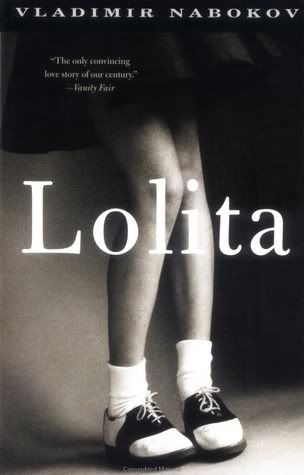
Julia Reviews "Lolita" by Vladimir Nabokov

Title/Author: Lolita by Vladimir Nabokov
Publisher/Year Published: 1997 by Vintage International (first published 1955)
How I got this book: It wasn't actually a book, but an audiobook (from the library, of course)
Why I read this book: I saw the movie and was vehemently told that the book was extremely better
Rating: 4 stars

There are few things more confusing than being serenaded by the lovely voice of Jeremy Irons when the content is the diary of a pedophile.

I feel like most people know what Lolita is about, but if not the summary is it is the confessions of a man, Humbert Humbert, as he tells of his emotional and physical relationship with 12 year-old Dolores, aka Lolita, as she grows into adolescence. I can hear some of you scoffing already. What could make anyone want to read about such a disturbing topic?
You have to be an artist and a madman, a creature of infinite melancholy, with a bubble of hot poison in your loins and a super-voluptuous flame aglow in your subtle spine (oh, how you have to cringe and hide!), in order to discern at once, by ineffable signs—the slightly feline outline of a cheekbone, the slenderness of a downy limb, and other indices which despair and shame and tears of tenderness forbid me to tabulate—the deadly little demon among the wholesome children; she stands unrecognized by them and unconscious herself of her fantastic power.

The writing. It is beautifully written. You would never think that you could get caught up in the mind of such a sick person, but you do. You're not really rooting for him, per say, but I definitely understood him most of the time. The author sums this up in the foreward, "But how magically his singing violin can conjure up a tendresse, a compassion for Lolita that makes us entranced with the book while abhorring its author!"

I was very rarely taken out of the story, which is an unusual case for me with classics, but that may also have to do with Mr. Irons' performance. It was hard pressed to get me out of the car most nights, at least until I found a good stopping point. He voice embodies Humbert. It is like listening to a narrative movie, a production of a one man play.

If you're looking to tackle a book from the 1001 Books to Read Before You Die, Modern Library's 100 Best or just want to read a book from a different perspective, Lolita is for you.

And I strongly suggest you get the audiobook with Jeremy Irons. It completely enhanced the experience for me for the better I believe. Any time you can get a little more Iron's in your life, you must jump on it! Now to go watch The Lion King...

I give this book 4 stars for pure can't stop listening enjoyment.

Wednesday, July 14, 2010

Lori's Livres--The Sun Also Rises by Ernest Hemingway

Book Title/Author: The Sun Also Rises by Ernest Hemingway
Publisher/Year Published: Scribner, 1926
How I got a hold of this book: I bought it at a used bookstore in Tulsa.
Why I read this book: I bought this book a couple of years ago and finally got around to reading it this summer. I bought it because it was one of Hemingway's books and because it's on just about every "You must read these books or else" list you come across. I couldn't say that there was much of an impetus to read it this summer other than I simply decided it was time to start reading.
Rating: 5+ stars--I absolutely love this story! I’d even go so far as to say it’s a new favorite. I love the idea of traveling from site to site and being drunk almost the entire time, but still getting amazing opportunities and getting to see amazing things, but I’ll elaborate a bit on that.

This was my fourth Hemingway and I'd say it's tied (with A Farewell to Arms) for favorite. There are so many wonderful things I'd like to say about this book. But I'll just go with the strongest feeling I had while reading it--I wanted to run away to Italy or France and become a foreign correspondent for an English language newspaper. I really liked how the main character, Jake Barnes, lived. Barnes and his friends traveled from France to Spain and to another couple of places. They were drunk pretty much the entire time, but they met a lot of new people and got to see and do some really cool things, like an awesome fishing trip or the bull fights. Barnes was running up against deadlines, kind of like I am right now with getting this review done. This is a storyline that I am just attracted to…it’s the same in The Rum Diary by Hunter S. Thompson and with Gregory Peck’s character in Roman Holiday.

A lot has been said about Hemingway's treatment of his female characters. Of all of the Hemingway I've read, Lady Brett Ashley is my favorite of his females because she's not terribly passive. She's stronger and she has (and knows) her own mind. Some people might call her cruel or flighty, but I think she just wants to explore as much as she can and is willing to play situations and people to her advantage.

I think that this novel gives an excellent feel for Hemingway's infamous narrative style. The sentences were, for the most part, short and direct. They were blunt. They told you how to feel and what to think. And I appreciated that. This would be a really good novel to read if you've never read Hemingway before because, as already mentioned, it gives a good taste of his style and it's pretty short, so if you don't like, it's not like you've wasted too much time.
Related Posts with Thumbnails