I want to run. For fun. For exercise. For me. I used to run all the time when I played soccer because that's part of the game. I never really got into running long distances around the track as training in the off-season, like so many of my friend did, but that didn't mean I wasn't jealous. Fast forward nearly ten years, two undergraduate degrees and one, almost two, masters degrees, and I would kill to be running as a way of losing the grad school weight.
I mean, really, I would love myself a lot more if I were doing ANYTHING to be losing the grad school weight.
So I search the best way I know how--books. I read books upon books about losing weight. Both sides of it--how to stop eating a ton of shit and how to get off my ass.
I've found books on clean eating, on eating healthy on a budget--both financial budget and time budget, on skinny Italian food, on eating six meals a day to lose weight--even when you aren't hungry. I've read books on being a vegan--but I love bacon and steak and chicken too much. I've read books on how to be a yogi--both from the diet and the exercise standpoint. But I've never read a book on running.
I love yoga, but I think that yoga is more of a "me" thing--I do it (or, rather, want to do it--let's be honest, I'm not DOING much of anything lately) because it makes me feel good. So I need and want to find something else to shed the pounds (a dear friend of mine runs to lose weight and does Zumba to feel good). I like that philosophy. This way yoga won't become my make it or break it thing. It will be my calming down thing.
This post had some bookish point...
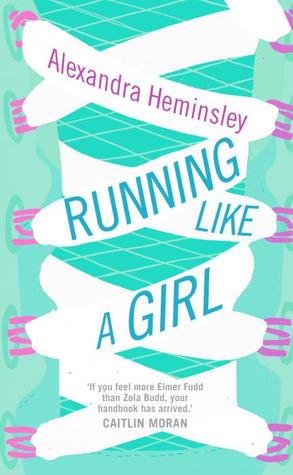
I recently found Running Like a Girl: Notes on Learning to Run by Alexandra Heminsley, which is part memoir and part guide. Heminsley shares with readers her journey to become a runner from being not a runner in her 30s, then she creates the guide that she wished she had had when she first started out.
Confession--I've only just started reading it, so I can't review it yet. But I wanted to call everyone's attention to the book in case, like me, you are wanting to soak up the nice fall weather and start running before it becomes all icky and winter-y. You can totally expect a review and a status report next month.
Do any of you have any good guides for getting started running?
I mean, really, I would love myself a lot more if I were doing ANYTHING to be losing the grad school weight.
So I search the best way I know how--books. I read books upon books about losing weight. Both sides of it--how to stop eating a ton of shit and how to get off my ass.
I've found books on clean eating, on eating healthy on a budget--both financial budget and time budget, on skinny Italian food, on eating six meals a day to lose weight--even when you aren't hungry. I've read books on being a vegan--but I love bacon and steak and chicken too much. I've read books on how to be a yogi--both from the diet and the exercise standpoint. But I've never read a book on running.
I love yoga, but I think that yoga is more of a "me" thing--I do it (or, rather, want to do it--let's be honest, I'm not DOING much of anything lately) because it makes me feel good. So I need and want to find something else to shed the pounds (a dear friend of mine runs to lose weight and does Zumba to feel good). I like that philosophy. This way yoga won't become my make it or break it thing. It will be my calming down thing.
This post had some bookish point...
I recently found Running Like a Girl: Notes on Learning to Run by Alexandra Heminsley, which is part memoir and part guide. Heminsley shares with readers her journey to become a runner from being not a runner in her 30s, then she creates the guide that she wished she had had when she first started out.
Confession--I've only just started reading it, so I can't review it yet. But I wanted to call everyone's attention to the book in case, like me, you are wanting to soak up the nice fall weather and start running before it becomes all icky and winter-y. You can totally expect a review and a status report next month.
Do any of you have any good guides for getting started running?


 ,
,  , or any Stephen King novel, this may be the scariest book I've ever come across. While there may be no vampires, demons, or murderers, there is something even more frightening: reality.
 by Daniel Becker